Learn why Canadian fund managers, investors, and private equity groups use Cayman holding companies for capital raising, pooling investors, and fund structures.
The Cayman Islands is the world's leading domicile for investment funds and private equity vehicles. That pedigree is real - but it doesn't automatically make Cayman the right home for an operating Canadian group's holding company. Here's how to tell the difference.
Why funds love Cayman
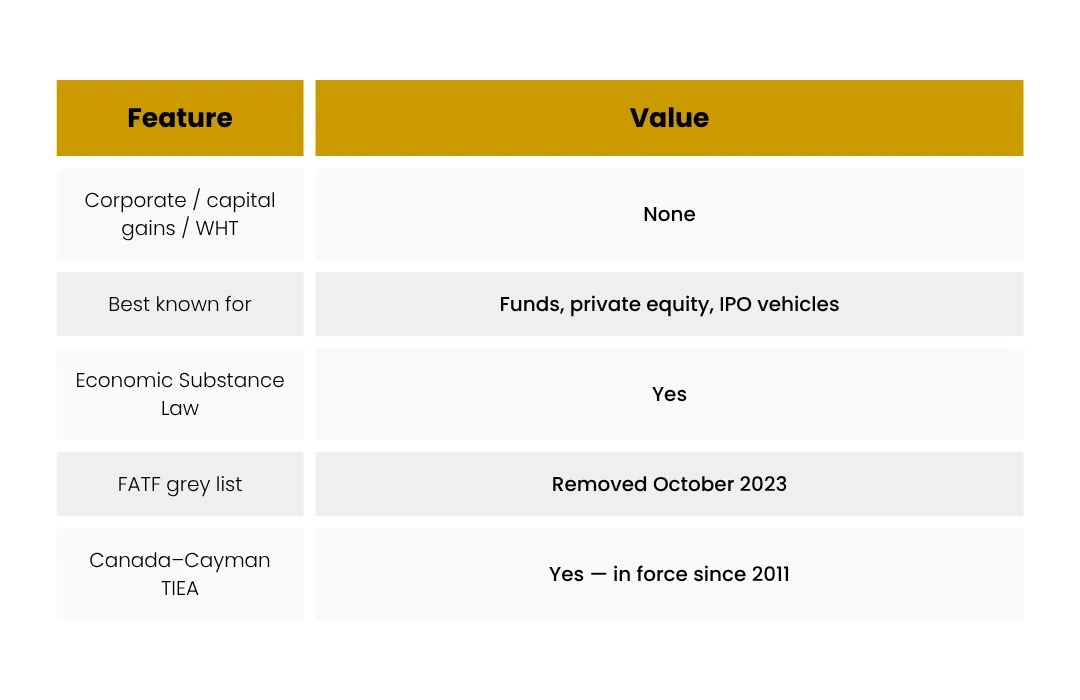
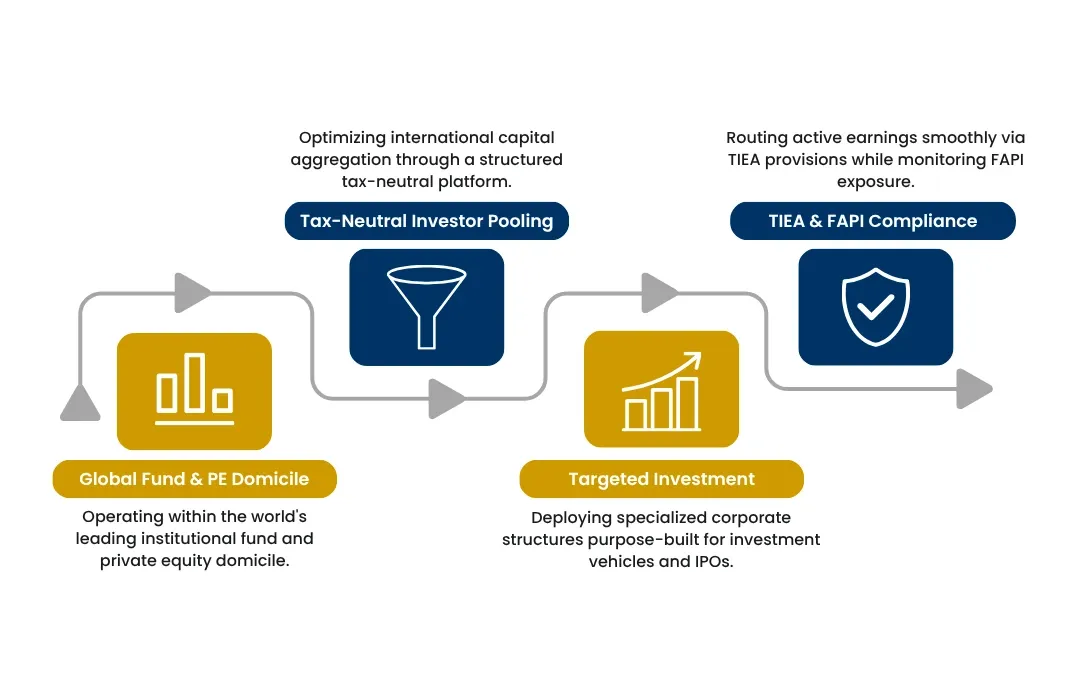
Cayman offers tax neutrality (no corporate, capital gains or withholding tax), a sophisticated legal and regulatory framework built for funds, world-class service providers, and global investor familiarity. For a fund pooling investors from many countries, a tax-neutral vehicle means tax happens at the investor level, not trapped in the fund. That's the whole point.
What Cayman is genuinely good at
- Investment funds - hedge funds, PE, venture, and the SPVs beneath them.
- Global capital-raising vehicles, including IPO holding companies.
- Neutral pooling of international investors.
When a Canadian operating group should use it
Cayman makes sense for a Canadian group when it's raising a fund, building an investment vehicle with multiple investors, or creating an IPO-ready holding structure. For a simple owner-managed operating business with no external investors, a Cayman holdco usually adds cost and complexity without a matching benefit - a treaty country or a Canadian holdco is often better.
The reputation update
Cayman tightened its regime and was removed from the FATF “grey list” in October 2023, restoring its standing as a compliant, well-regulated centre. It's a serious jurisdiction - but it should be chosen for the right job.
The Canadian angle
Cayman is tax-neutral, not tax-free for a Canadian owner. Thanks to the Canada–Cayman TIEA, active business income can reach exempt surplus; but passive income in a controlled Cayman affiliate is FAPI, taxed in Canada as earned. For fund and investment structures, Canadian investors also face their own foreign-investment reporting. Choose Cayman for genuine fund/PE purposes - and report it properly (T1134/T1135).
Frequently asked questions
Is Cayman only for big funds?
It's optimised for funds and investment vehicles, but smaller managers and SPVs use it too. For a plain operating business with no outside investors, a treaty country or Canadian holdco is usually more appropriate.
Is Cayman reputable?
Yes - it's a leading, well-regulated financial centre and was removed from the FATF grey list in October 2023 after strengthening its regime. Reputation concerns are far less than the cliché suggests.
Why do funds use a tax-neutral jurisdiction?
So that tax falls on investors in their home countries rather than being trapped at the fund level - avoiding an extra layer for a pool of investors who are taxed differently from one another.
Will a Cayman holdco save my Canadian operating company tax?
Not by itself. Canadian rules (FAPI, surplus, worldwide taxation) still apply. Cayman's advantage is neutral pooling for investment structures, not sheltering active Canadian business income.