
Tax Season Canada: What to Prepare Before You File
Tax season in Canada can feel stressful if your financial records and tax documents are not organized ahead of time. However, when you prepare early and gather the required slips, receipts, and deduction records, filing your return becomes much easier. Proper preparation also helps reduce the risk of CRA penalties, missed deductions, or last-minute filing pressure.
To help simplify the process, this guide explains what you should prepare before filing your tax return in Canada. We cover key CRA deadlines, required tax documents, and practical preparation steps for individuals, self-employed professionals, and business owners.
Understand Tax Season Canada Deadlines
Understanding the key tax deadlines in Canada is essential before filing your return. Missing these deadlines can lead to late filing penalties, interest charges, and unnecessary stress during tax season. Knowing the important dates also helps you plan ahead and avoid last-minute filing pressure.
April 30 personal deadline
For most individuals in Canada, the deadline to file a personal income tax return is April 30 each year. If the date falls on a weekend or holiday, the deadline moves to the next business day.
June 15 self-employed filing
For people who are self-employed and wondering when does tax season start in Canada, they are required to file their taxes by June 15 of each year. However, if they owe taxes, they must still pay the tax amount by April 30, or they will incur interest on the amount owed.
Payment due dates
Payments owed to the CRA should be made on April 30, regardless of the date of your filing deadline. If you file past the April 30 deadline, you will begin to incur interest from the CRA, accruing until you pay your outstanding balance in full.
Start Preparing Before Tax Filing Season
Many taxpayers only begin organizing documents once tax season starts. However, preparing your records early can significantly reduce stress and help ensure your return is accurate and complete. Early preparation also gives you more time to review deductions and confirm your financial records.
By preparing ahead of time during the Canada tax season changes you can avoid tax penalties and interest. If you find you owe taxes, you have more time available to arrange for the payment. Preparing early for tax season helps you stay organized, manage your financial obligations effectively, and avoid last-minute filing pressure.
Gather Your Required Tax Documents
The first step in preparing your Canadian income tax return is gathering the correct documents and tax slips. Filing without complete documentation can lead to reporting errors or missed deductions, so it is important to keep all records organized and stored in one secure place.
T4, T5, T4A slips
T4 slips report your employment income. T5 slips report your investment income. T4A slips report other sources of income such as commissions and/or pensions. These slips will ensure your income is accurately reported for your tax return.
Investment & benefit slips
You will receive investment slips (for RRSP contributions), and benefit slips (for EI) or other government payout slips. These documents will assist in the accurate calculation of your deductions and the taxable income reported on your income tax return.
Business income records
If you operate a business, maintain clear records of invoices, sales reports, and payment receipts.These records help verify your income and support the figures reported on your tax return if the CRA reviews your filing. These documents are considered proof of your total income and support the amount of profit you reported on your business income tax return.
Organize Income and Expense Records
Once you have gathered your documents, organize your income and expenses carefully. Proper record-keeping helps ensure your tax return is accurate and reduces the risk of CRA reviews or adjustments. Organized records also make the filing process faster and more reliable.Having organized records is critical to ensure your taxes are filed correctly for the tax filing season Canada.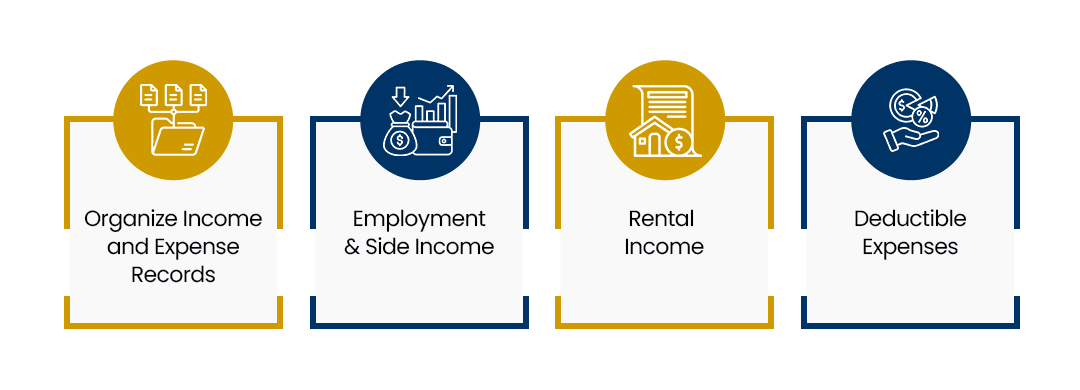
| Document Type | Description |
| Organize Income and Expense Records | It is important to organize your expenses and income after you have gathered the necessary documents. Having organized records is critical to ensure your taxes are filed correctly for the tax filing season Canada. |
| Employment & side income | Report all types of income that you earn including salary, freelance work, commission and online earnings to the CRA, so there are no issues later. |
| Rental income | Make sure to track what you have received from the rental property along with all expenses related to the property such as utility bills, repairs and property tax. |
| Deductible expenses | Retain all receipts for medical bills, charitable donations and any work-related purchases as these receipts are required to support the deduction when the CRA reviews your return. |
If You Are Self-Employed
If you are self-employed, calculate your net business income by subtracting allowable business expenses from your total revenue. Maintaining accurate records of income and expenses is essential for tax reporting and compliance.
Thoroughly ensure that the amounts collected for GST/HST from clients match your reported amounts.
Ensure your expenses are itemized correctly, such as advertising, travel, or supplies. Accurate record-keeping makes tax filing easier and reduces the risk of a CRA audit.
For Business Owners: Payroll & CRA Review
Business owners should review payroll records before filing tax returns. Ensure employee T4 slips are accurate and confirm that CPP, EI, and income tax remittances were submitted correctly during the year.
Ensure your remittances for CPP & EI were made correctly during the year as if they are not made, you will be subject to penalties.
Additionally, confirm the taxable benefits of your company vehicle and bonuses are correctly reported on the CRA.
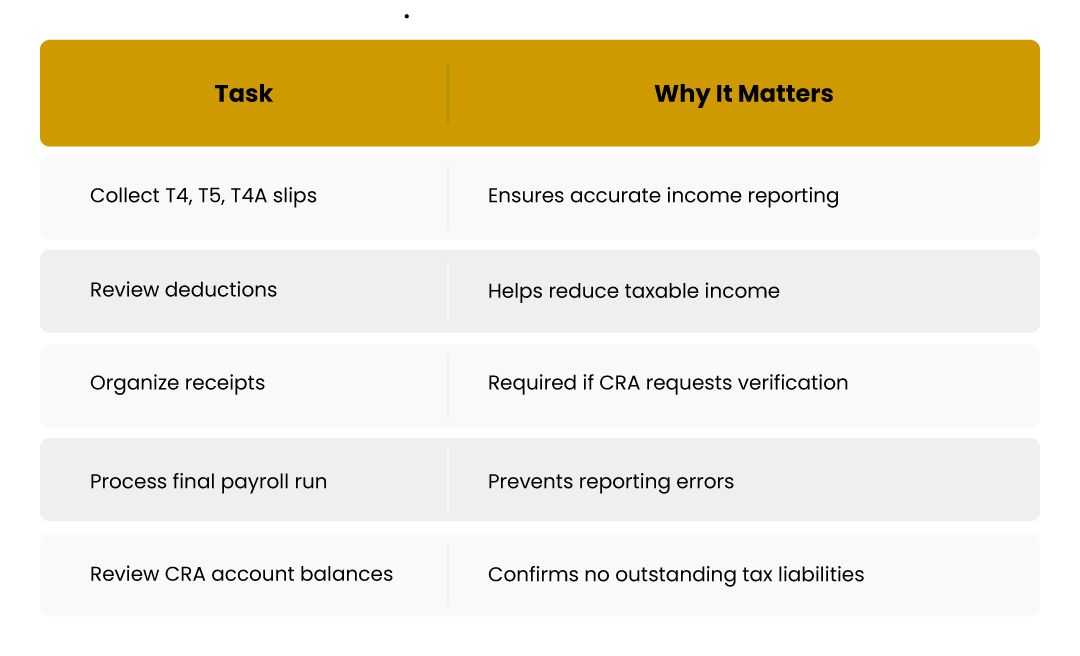
Quick Tax Season Canada Checklist
Conclusion
Tax season in Canada becomes much easier when you prepare your records early and understand the key CRA deadlines. By organizing your documents, reviewing your deductions, and confirming your income records in advance, you can file with greater confidence and reduce the risk of penalties or errors.In Canada, the CRA typically begins accepting tax returns in February, which is when tax season officially starts. By being proactive you will be able to keep track of your record-keeping, and consider potential deductions prior to April 30th.
At Orbit Accountants, we help individuals and business owners prepare for tax season with accurate bookkeeping, tax planning, and CRA-compliant filings. Our team works closely with clients to organize financial records, identify deductions, and ensure tax returns are prepared correctly. Our experienced team focuses on compliance, accuracy, and proactive tax planning so that your tax preparation process remains smooth and stress-free.
If you want help preparing your records before the filing deadline, book a free consultation with Orbit Accountants. Our team can help you stay organized, reduce filing errors, and ensure your tax return meets CRA requirements.
Disclaimer: This article is provided for informational purposes only and does not constitute tax, accounting, or legal advice. Tax obligations may vary depending on individual circumstances. Readers should consult a qualified tax professional before making filing or financial decisions.
Frequently Asked Questions
1. When does tax season start in Canada?
Tax season in Canada generally begins in February when the CRA starts accepting tax returns, making it wise to gather documentation early and complete your preparation prior to the hectic tax season.
2. When does tax season end in Canada?
The end of tax season in Canada is April 30 for most people. If you are self-employed, you must file your taxes by June 15; however, your taxes due must still be paid by April 30 to avoid incurring an interest charge on the payment.
3. What should I prepare before filing taxes in Canada?
You should have T4 slips, investment slips, records of business income, receipts for expenses, and detailed receipts for deductions. A file of organized documents allows you to complete your tax filing correctly and gives you the best chance of not having any errors or further penalties.
4. What happens if I file late?
If you file your taxes late and owe taxes, then you will be subject to penalties from the CRA and daily interest on those amounts owed. Therefore, filing your taxes prior to the due date allows you to avoid these and preserve your personal financial record.