Canada Sales Tax: What Every Business Needs to Know
Every business owner needs to know how to manage sales tax in Canada. There are different provincial sales taxes based on the types of products/services they sell in Canada. There are some provinces with combined rates, meaning all sales tax is charged at one rate, and there are also multiple provinces with different rates depending on the province where the sale is made.
If you don’t charge your customers the right amount of sales tax or don’t have an account set up with the appropriate sales tax authority, you could be liable for penalties and interest. The really good news is that once you understand the basics of sales tax, it becomes easy to handle properly.
In this blog post, we explain how the sales tax system works and what all business owners need to know to remain compliant and worry-free.
Understanding How Sales Tax Operates in Canada
The sales tax system in Canada can appear complicated due to having both federal and provincial tax systems. Businesses must understand both the type of taxes that apply to their province, how those taxes will affect what they charge their customers, and how to report the taxes when it comes to filing their taxes.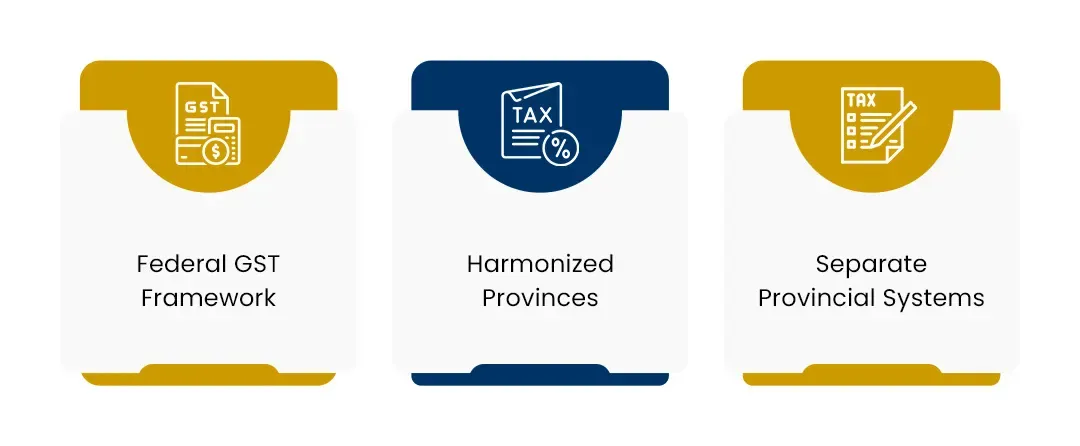
Federal GST framework
The federal government has implemented a 5% Goods and Services Tax (GST) to the country as a whole. Business owners will charge their customers the GST on their sales of taxable goods and services. They will also be able to claim GST input tax credits for any GST they pay when purchasing goods and services for their business.
Harmonized provinces
Several provinces in Canada have combined the GST and provincial sales tax to create a single Harmonized Sales Tax (HST) for their province. In these provinces, businesses will collect the HST as a single combined tax and will file their HST taxes the same as they would for their federal GST.
Separate provincial systems
There are still several provinces in Canada that operate and charge the provincial sales tax separate from GST. In these provinces, businesses may be required to have separate registration to collect tax, to report tax, and to remit tax to the provincial authorities.
How Different Goods and Services Are Taxed
Not all products/services will be treated the same when it comes to tax. Depending on the product or services being sold, it will fall under one of three taxation categories – fully taxable, zero-rated and exempt. It is extremely important to understand how each category of a product/service is classified.
Fully taxable transactions
Most products and services that a business sells will fall under the category of fully taxable. Businesses will charge GST or HST on the sale of goods/services such as clothing, electronics, consulting services and meals in restaurants.
Zero-rated categories (0% GST/HST)
Examples being basic groceries & some medical devices. Businesses will charge businesses tax on purchases made subject to the Zero-rated GST/HST rate, but can still claim the ITCs for the related purchases.
Exempt supplies and when no tax applies
Residential rent, Financial Services (most give services), and some healthcare services are also Exempt Supplies. No GST/HST applies to the purchase of these supplies by the supplier, nor can the supplier claim I.T.C’s for the cost of providing the supplier to the purchaser.
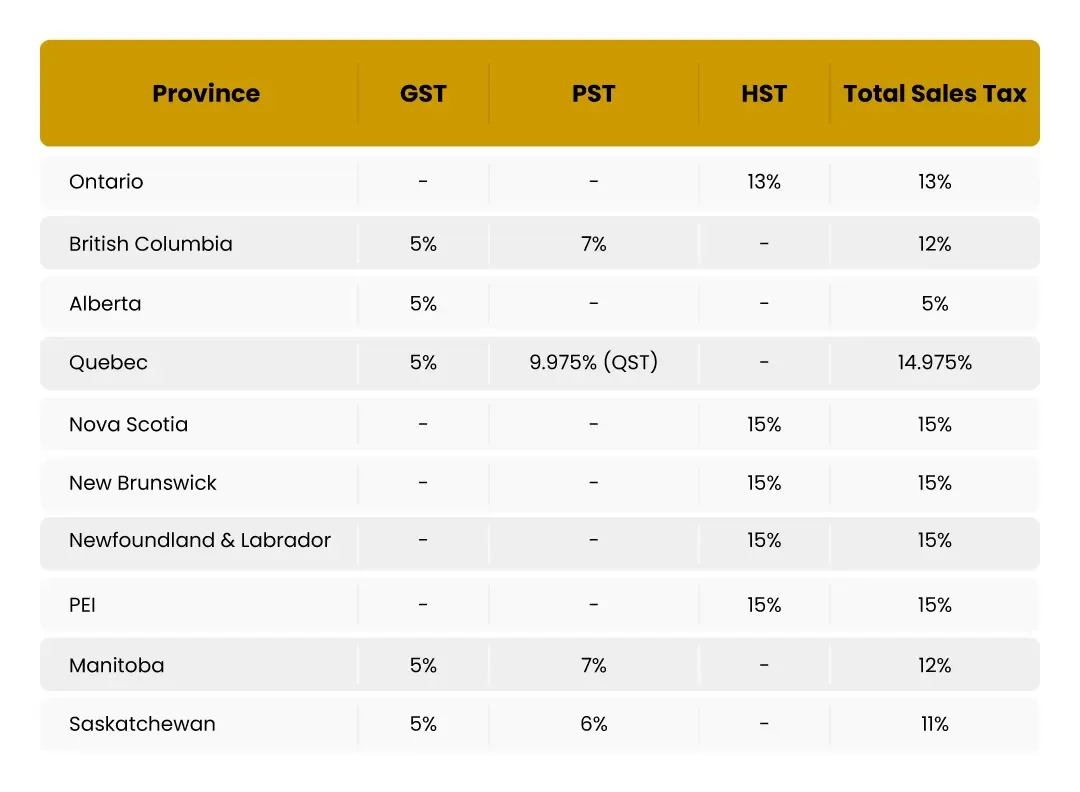
Canada Sales Tax Rates by Province
Do You Need to Register for Canada Sales Tax?
All businesses in Canada must register for provincial sales tax Canada when their revenue exceeds the $30,000 threshold for small suppliers in a period of 12 months. Once a business exceeds the small supplier threshold, it must register and start to charge customers the appropriate amount of tax on taxable supplies.
For smaller businesses that haven’t reached the $30,000 threshold, there can be advantages to registering voluntarily. Some of these advantages include being able to collect input tax credits for costs incurred, as well as appearing to be a more established business to other vendors and customers.
Understanding the sales tax rules in Canada can help to avoid missing returns or being penalized for being late.
A Practical Approach to Managing Your Sales Tax
To effectively manage your sales tax Canada there must be a system in place and continuous monitoring done in order to keep compliant easily and with less stress.
| Step | What It Means |
| Register with the CRA and relevant provinces | Open GST/HST accounts and provincial accounts if required. |
| Identify the correct rate based on customer location | Charge tax based on where your customer receives goods or services. |
| Collect and record tax accurately | Show tax clearly on invoices and track it in accounting software. |
| Claim Input Tax Credits properly | Claim GST/HST paid on eligible business expenses. |
| File returns and remit payments on schedule | Submit returns on time and pay collected tax. |
| Reconcile accounts and maintain audit-ready records | Match collected tax with filings and keep records organized. |
Key Takeaways for Managing Sales Tax in Canada
By understanding your sales tax Canada categories, registration thresholds and reporting periods you can be compliant! You should always charge the correct tax rate based on where the customer is located. You should keep your invoices and supporting receipts very organized!
If you use accounting software or an accountant, you’ll significantly reduce the chance of making mistakes. While many businesses use sales tax calculators to verify the accuracy of their calculations, it is always wise to consult a qualified professional – using an accountant to review your returns will provide peace of mind and ultimate accuracy.
Conclusion
The challenges associated with compliance with sales tax are surmountable with proper procedures and information. To avoid problems with your business and possible fines, you should know when and how to register, what rate of sales tax to charge, and when to file a return.
Orbit Accountants provides professional tax compliance to businesses throughout Canada. They will help you from registration to filing and from audits to preparing taxes. The objective of Orbit Accountants is to provide businesses with accurate information and to provide businesses with a reliable compliant experience. We help you to focus on growing your business while we professionally and efficiently manage your company’s tax requirements from many years of experience.
Want to learn more about our tax compliance services? Book a free consultation today.
Disclaimer: This article is provided for general informational purposes only and does not constitute tax, legal, or accounting advice. Sales tax obligations may vary depending on your province, industry, and business structure. Businesses should consult a qualified professional for advice specific to their circumstances.
Frequently Asked Questions
1. What is the basic GST rate in Canada?
The GST is 5% at the federal level. There are other provinces that have combined the GST with their own provincial taxation through HST or harmonized sales taxes. The total will vary depending on where you are located.
2. When must a business register for sales tax?
When a business has taxable sales revenue exceeding $30,000 in the preceding 12 months (i.e., a rolling one-year period), it is required to register for sales tax. There is also an option to register voluntarily before reaching this threshold.
3. Can I claim tax paid on business expenses?
Yes, if your business is registered, you may be eligible to claim Input Tax Credits (ITCs) for sales taxes paid on eligible business-related expenses, thereby reducing your overall sales tax amount payable.
4. What happens if I file late?
The penalties and/or interest charged for late filing could be significant; therefore, it is important that all businesses file their returns on time even if no sales tax was owed during that time period.