

When Are Corporate Taxes Due? Deadlines for 2026
For Canadian business owners, staying ahead of tax deadlines is about more than just compliance—it’s about protecting your cash flow and your peace of mind. As we look toward 2026, understanding exactly when your filings and payments are due is the best way to avoid the stress of last-minute scrambles and costly CRA penalties.
1. Why Canada Corporate Tax Deadlines Matter
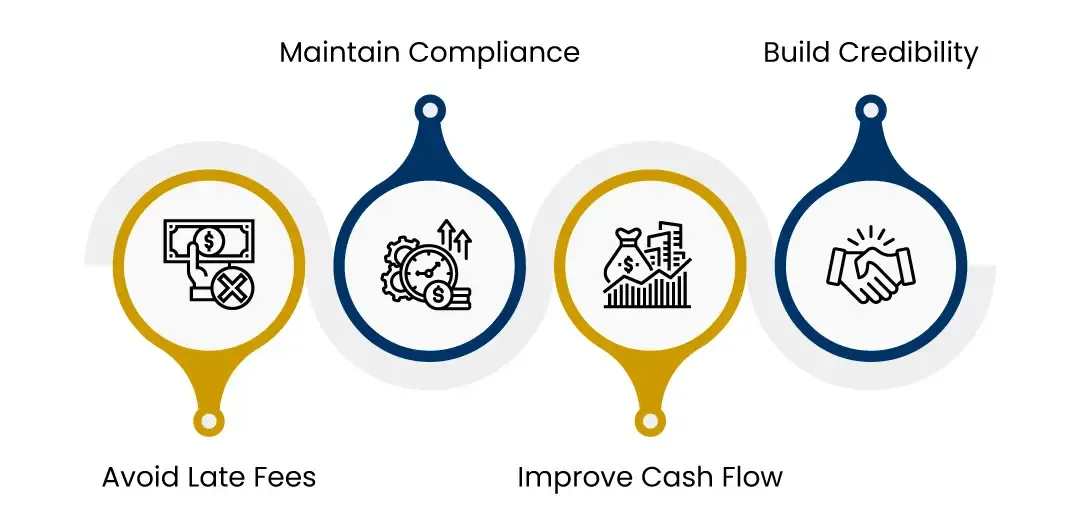
Corporate tax deadlines are extremely important because missing them could end up costing your company money. The Canada Revenue Agency (CRA) requires that all corporations file their income tax returns and pay their taxes on time. If you do not meet a deadline, you may incur penalties or interest.By planning ahead, you’ll be better able to manage cash flow and know how much tax will be due and when it has to be paid. This keeps your company financially healthy and avoids last-minute panic.
Are you confident your business tax filings are fully optimized and compliant?
2. T2 Corporate Tax Return: Key Facts
In Canada, the CRA requires a T2 return for every incorporated business. This is required even if you’re in a growth phase and haven’t turned a profit yet, or if the company was inactive this year. Your T2 corporate income tax return must be completed and submitted to the CRA every year, regardless of business activity.
The T2 return includes all corporate income (including bank interest), expenses (including salaries and overhead), taxable profits, and the tax you owe. Submitting an accurate T2 builds a clean financial history for your brand under Canadian income tax laws.
3. General Deadline: Six Months After Year-End
Typically, Canadian corporations are expected to file their T2 return within six months of the end of their fiscal year. This is not always the calendar year; it is based on your company’s selected fiscal year-end date.
For example, if your corporation has a fiscal year-end of December 31, 2025, your filing deadline would be June 30, 2026. If your fiscal year ends March 31, 2026, your T2 tax return must be filed by September 30, 2026. To determine your timeline, count six months forward from your fiscal year-end.
4. Payment Deadlines vs. Filing Deadlines
Many business owners are unaware that the due date for filing a T2 return and the due date for payment are two separate items. Although the return is filed within six months, the payment is typically due before the filing deadline.
- Standard Rule: In most cases, the CRA requires tax payments within 2 months of your year-end.
- CCPC Exception: Certain Canadian-Controlled Private Corporations (CCPCs) may qualify for a 3-month window following the end of their fiscal year.
Orbit Advisor Tip: We often see owners focus on the 6-month filing date, only to be surprised by interest charges because the payment was due months earlier. We recommend setting up a “Tax Reserve” account throughout the year so the cash is ready when the 2 or 3-month deadline hits.
5. Corporate Tax Deadlines in 2025: Detailed Dates
The table below identifies common corporate deadlines in 2026 for corporations with different fiscal year ends:
| Fiscal Year-End | Filing Deadline (T2) | Payment Deadline (Standard) | Payment Deadline (Eligible CCPC) |
| Dec 31, 2025 | June 30, 2026 | Feb 28, 2026 | March 31, 2026 |
| Jan 31, 2026 | July 31, 2026 | March 31, 2026 | April 30, 2026 |
| March 31, 2026 | Sept 30, 2026 | May 31, 2026 | June 30, 2026 |
Note: These are general examples. If a deadline falls on a weekend or a public holiday recognized by the CRA, your return is typically considered on time if received on the next business day.
6. What If Your Tax Year Doesn’t End on December 31?
Canadian businesses can select a fiscal year-end most appropriate for their operations. To calculate your specific dates, count six months forward from your year-end for your filing date and two or three months forward for your payment date.
7. Late Filing Penalties and Interest
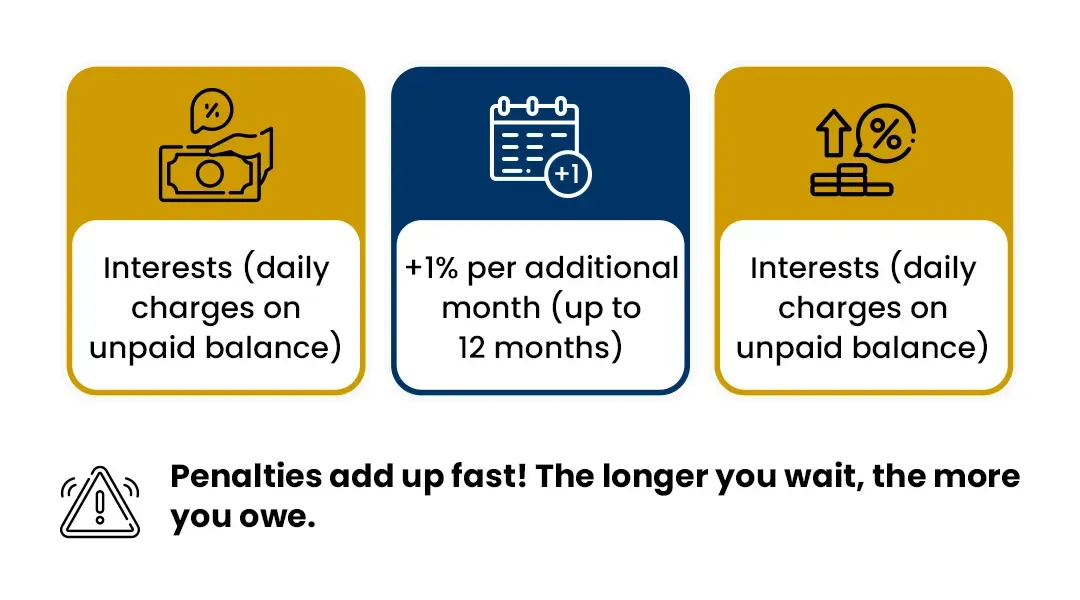
If your corporation files its T2 return after the due date, the CRA generally imposes a late-filing penalty. This typically starts at 5% of the balance owing, plus an additional 1% for each full month it is late, up to 12 months.
Interest is also assessed on any taxes owed from the date they were due. To protect your cash flow, you should always aim to file and pay on time.
8. GST/HST Deadlines for Corporations
If you’re registered for GST/HST, your filing frequency—monthly, quarterly, or annually—dictates your deadlines. Monthly and quarterly filers typically have one month after their period ends to file, while annual filers usually have three months following their fiscal year-end.
9. Conclusion
Staying on top of 2026 deadlines is critical for financial clarity. Remember: file your T2 within six months and pay your taxes within two or three months of your year-end.
At Orbit Accountants, we specialize in taking the complexity out of the Canadian tax system. Whether you need help with T2 filings, GST/HST, or proactive Bookkeeping, our goal is to make your finances low-stress.
10. Frequently Asked Questions (FAQs)
When are corporate taxes due in Canada for 2026?
Returns are due within six months after fiscal year-end. Payments are generally due within two months (or three months for certain private corporations) after year-end.
Do I need to file a T2 return if my company had no income?
Yes. All registered Canadian corporations must file a T2 return annually, regardless of whether they earned a profit or were inactive.
What happens if I pay corporate tax late?
The CRA will charge interest and potential penalties daily until the full amount is received.
Disclaimer: This article is for informational purposes only and does not constitute professional tax, legal, or accounting advice. Tax deadlines and regulations can vary based on your specific business structure and jurisdiction. Always consult with a qualified professional—like the team at Orbit—before making financial decisions.