
How to Prepare Your Books for Tax Season (2026)
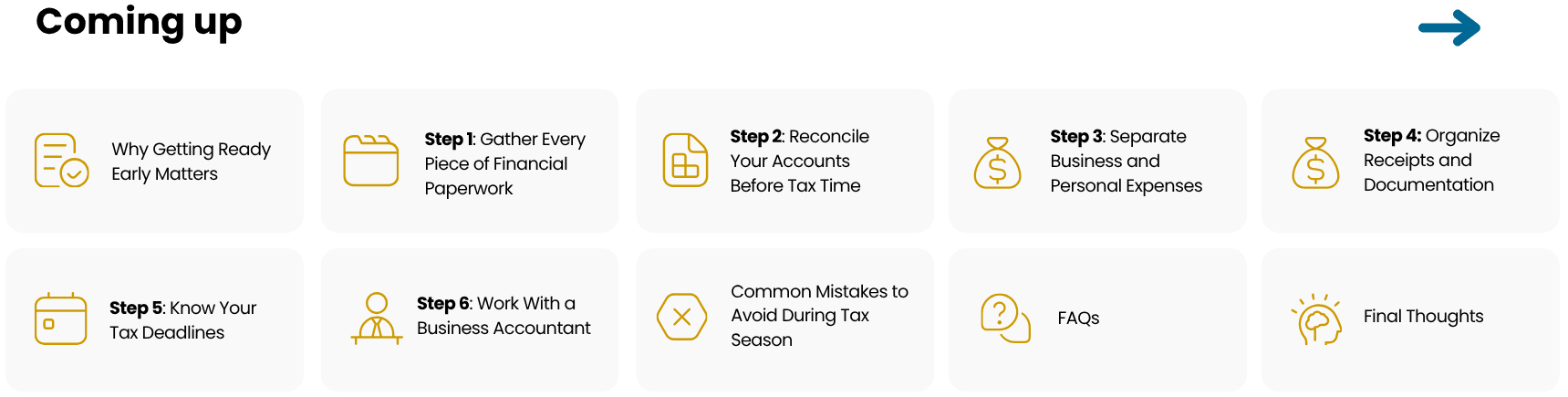
Why Getting Ready Early Matters in 2026
Many Canadian small business operators find that tax time sneaks up quickly on them. You can be focused on your clients and cash flow one day, and bam – April 30, 2026, is here and your taxes are due!
By preparing your books well in advance of April 30, 2026, you’ll alleviate a lot of stress. As the Canada Revenue Agency (CRA) continues to increase its use of electronic records and automated review systems, having your books clean and organized will be important for an accurate and compliant tax return process. Having clean, well-organized books supports audit readiness, reduces the likelihood of delays, questions, or reassessments, and makes it easier to accurately claim eligible deductions and credits.
When your records are complete, your tax accountant will have time to work with you on tax strategy and planning rather than scrambling to collect documents that you couldn’t find. This allows for smoother filing, as well as better financial clarity going forward into the subsequent tax year.
Are you confident your business tax filings are fully optimized and compliant?
Step 1: Gather Every Piece of Financial Paperwork
Start by collecting all records from the previous tax year:
- T-slips (T4s, T5s, T5018s for contractors)
- Invoices and receipts (digital and paper)
- Bank and credit-card statements
- Payroll summaries and expense reports
If you use tax software or cloud-based accounting systems, export your reports by category—income, expenses, and assets.
Step 2: Reconcile Your Accounts Before Tax Time
Matching book-keeping records (accounts) against bank and credit card statements (bank statements) means confirming that all transactions (either payments, deposits or refunds), are reflected in your records.
Step 3: Separate Business and Personal Expenses
Combining business and personal expenses is among the most frequent bookkeeping errors of Canadian small-business owners. Separating the two can help improve your ability to manage and track deductible expenses (e.g., office rent, utility bills, software licenses, vehicle expenses, and other supplies) and also reduce the risk of CRA penalties and interest if your tax return is ever audited.
Step 4: Organize Receipts and Supporting Documentation
For the CRA (Canada Revenue Agency) to validate your report/reports, you must keep copies of your invoice or receipt as supportive documents. As businesses have become more digitalised by 2026, it is generally acceptable to maintain records in an electronic format (such as with a smartphone or tablet), but these electronic formats must still be able to provide accurate and complete records.
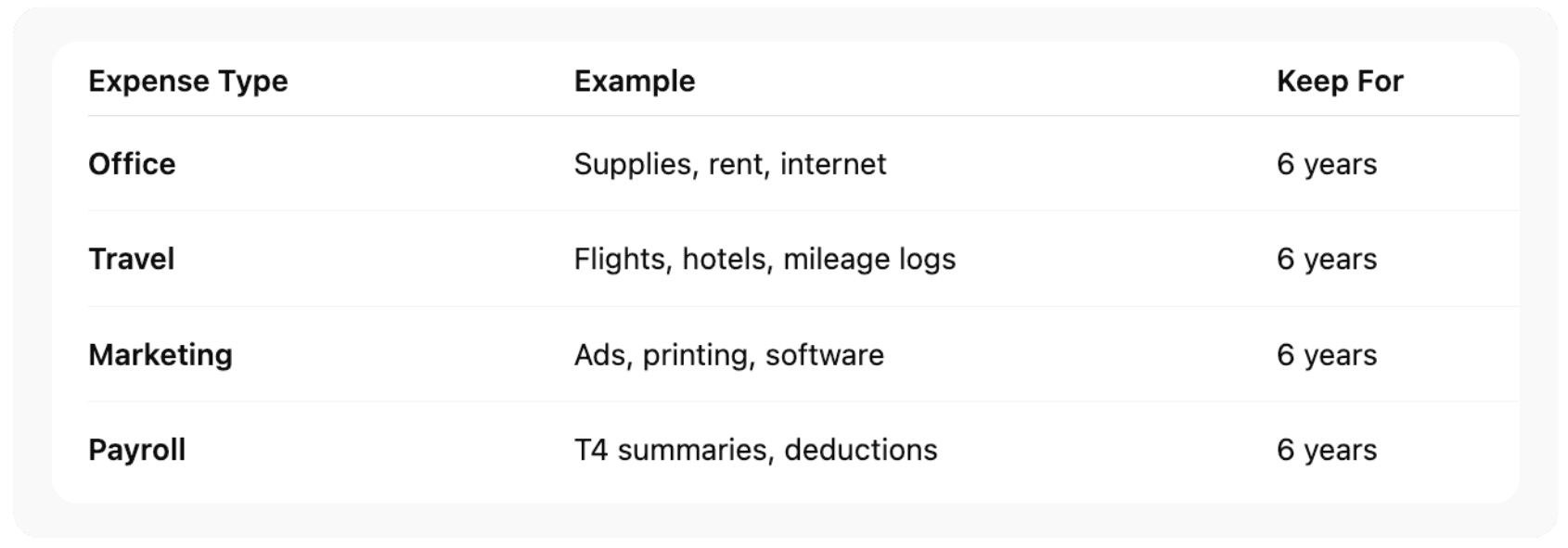
The CRA generally requires businesses to keep books and supporting records for at least six years from the end of the last tax year to which they relate.
Step 5: Know Your Tax Deadlines
By knowing when your key deadlines are, you can avoid being penalized for filing late and/or causing yourself additional stress. As it relates to the 2026 tax season, some of the dates you need to be aware of are as follows:
April 30, 2026: Most individuals & sole proprietors must file their personal income tax return by this date.
Any balance owing after April 30, 2026 may be subject to interest and late-payment penalties starting May 1, 2026.
June 15, 2026: Self-employed persons have this date to file their tax returns but, as with all taxpayers, payments are due April 30.
Corporate Taxes: Corporate tax filing dates will vary depending on your corporation’s fiscal year end.
GST/HST Filing: Your assigned filing frequency will determine how often you need to file GST and HST returns.
It is important that you mark these dates on your calendar and, ideally, that you close your books by two & three weeks prior to these deadlines. This will allow your tax professional time to find any missing entries and/or resolve any issues that may arise prior to the time of submission.
Step 6: Work With a Business Accountant
A qualified business accountant like Orbit Accountants is a smart investment not only during tax season but also for growing businesses. An accountant can assist businesses with cash-flow planning and income fluctuations as their businesses develop, and they may recommend ways in which a business can create the best opportunities as it develops through suggestions such as utilizing fractional CFO services, as required.
Common Mistakes to Avoid During Tax Season
Taking steps to avoid these common problems can result in less wasted time, money and stress.
Not preparing your accounting records until late in the year
- Not including your prior year’s losses in your current year calculations
- Not reviewing your payroll deductions closely enough
- Missing your GST/HST filing and remittance due dates
- Assuming that your accounting software auto-corrects every potential mistake without you having to look it over manually.
To mitigate the risk of both financial and credibility loss, it is wise to be proactive.
Frequently Asked Questions
1. What’s the easiest way to get ready for tax season?
Start early. Gather your income and expense records monthly instead of waiting until March or April. Use folders or apps to track receipts year-round.
2. Can I file my own taxes or should I hire an accountant?
You can file personal taxes using CRA-approved tax software, but a business accountant ensures accuracy and identifies deductions you might miss.
3. What happens if I file late?
Late filings can attract penalties and interest, starting at 5 % of the balance owing plus 1 % per month. If you expect a refund, you won’t be fined—but you’ll delay getting your money back.
4. What if I have both employment and small-business income?
Your tax expert will combine both under your personal return. Keep your business records separate to make it easier to file a tax return and prove your deductible expenses.
5. Should my spouse or common-law partner file at the same time?
Yes. Coordinating with your spouse or common-law partner helps maximize credits and deductions, like the Canada Workers Benefit or spousal transfer amounts.
Disclaimer: This content is shared by Orbit Accountants for educational purposes only and should not be relied upon as tax, legal, or accounting advice. Tax obligations vary based on individual business circumstances. For guidance specific to your situation, consult a qualified tax professional or speak with the Orbit team.
Final Thoughts
Preparing your business taxes in Canada is not a difficult task, just as long as you keep accurate records, have clear deadlines, and take the assistance of an experienced business accountant. You will have confidence that your taxes will be filed correctly in 2026, and you will start the year ahead with a clear mind and focus.
If you are unsure of what your tax numbers are or would like to receive assistance in preparing your business taxes, reach out to a qualified Canadian tax professional. Having the right assistance will make the process of filing taxes less complicated and help you to plan ahead for tax time.
Orbit Accountants helps you quickly catch up on your bookkeeping, ensuring accuracy and efficiency so your financials are always in order.