Behind on tax returns in Canada? Learn what happens next, how to organize your records, and how Orbit helps small business owners catch up with the CRA.
Falling behind on tax returns in Canada is more common than most business owners admit. It usually does not start with negligence. It starts with a busy season, messy books, delayed receipts, or one year where cash flow got tight and filing felt too stressful to face.
Then one missed deadline turns into two. Notices pile up. The books become harder to clean up. And suddenly, catching up feels bigger than the original problem.
If that sounds familiar, take a breath. You are not the first business owner in this spot, and you are not stuck. The right approach is not panic. It is a clean, structured catch-up plan. That is exactly where Orbit helps.
Why Many Small Business Owners Fall Behind
Most owners who fall behind are doing too much themselves. They are running operations, chasing invoices, replying to clients, and trying to do the books at night. Eventually, bookkeeping slips. Then tax filing slips with it.
We see the same pattern often: receipts in different places, no separate business account, partial bookkeeping in Excel, and no clear view of what was filed and what was not. It feels messy, but it is fixable.
The important thing is to act before the gap gets wider. CRA penalties, interest, and collection pressure do not improve with time.
What Happens When You Do Not File
The consequences depend on what type of return is overdue, but the main risks are the same: penalties, interest, notices, and growing stress.
For most individual returns with a balance owing, the CRA late-filing penalty is 5% of the balance owing, plus 1% for each full month the return is late, up to 12 months. If you were charged a late-filing penalty in recent prior years and received a demand to file, the penalty can be higher. For corporations, the standard late-filing penalty is also 5% of unpaid tax due on the filing deadline, plus 1% per full month late, up to 12 months. Interest is charged on most late personal and business tax payments.
If you are behind on GST/HST, there may also be filing penalties when tax is owing, and monthly or quarterly filers generally have to file and pay within one month after the end of the reporting period.
Here is the part many owners miss: filing late is usually better than not filing at all. Even if you cannot pay immediately, getting the returns prepared is the first step toward containing the damage. CRA also allows payment arrangements in many cases if you cannot pay your debt right away.
Common catch-up deadlines to know
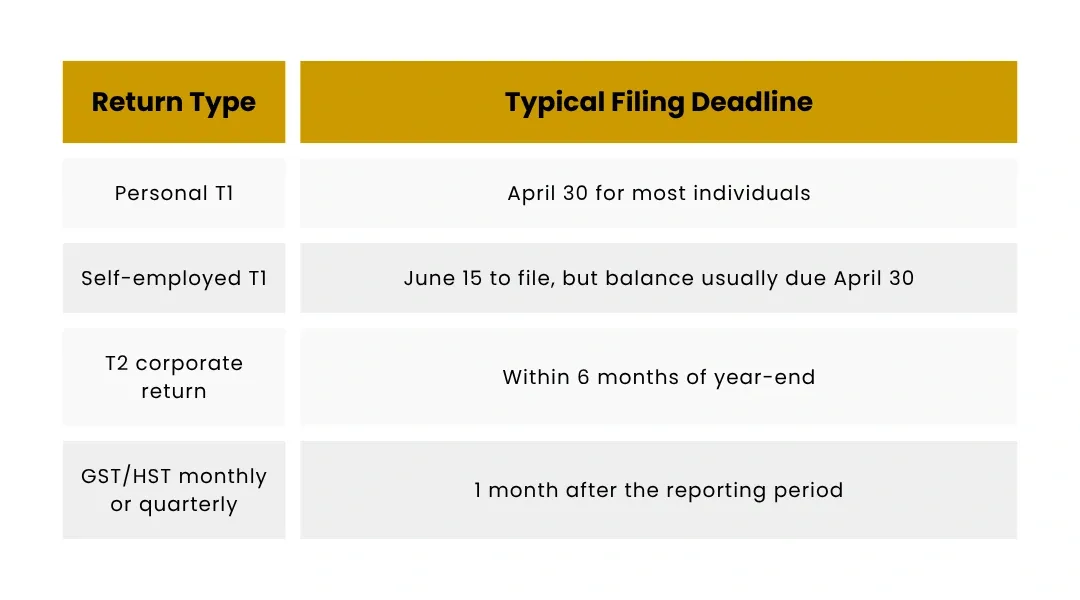
These are the general rules, but your exact facts still matter.
How to Organize Your Records for Catch-Up Filing
This is where people often freeze. They think they need perfect books before talking to anyone. You do not.
Start with the basics:
- list every year and return you think is overdue
- gather bank statements and credit card statements
- pull sales records, invoices, and payment processor reports
- collect prior returns, CRA notices, and login access
- download bookkeeping files if you used software before
- sort receipts into broad categories, not tiny line items
That is enough to begin.
If your records are incomplete, a good accountant can usually work backward. We reconstruct books from source documents all the time. What matters most is creating a clear filing roadmap: what is missing, what can be prepared now, and what needs cleanup first.
The Catch-Up Process: What an Accountant Does to Get You Current
When Orbit handles delinquent filings, we do not just “file the return.” We usually work through a sequence.
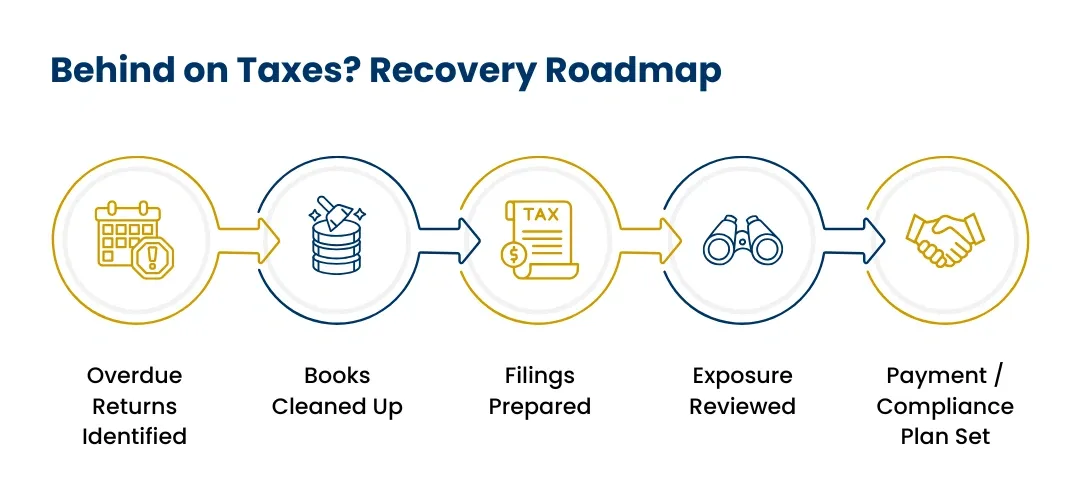
We identify what is overdue
That may include T1 personal returns, T2 corporate returns, GST/HST returns, payroll filings, or all of the above.
We clean the books
This is often the hardest part. We sort transactions, identify missing information, reconcile balances, and build a set of books that can actually support a filing.
We file in the right order
Sometimes the oldest year should be cleaned first. Sometimes GST/HST needs attention before income tax. Sometimes bookkeeping has to be rebuilt before anything can be filed with confidence. The right order matters.
We estimate exposure
Before filing, we usually help you understand the likely taxes, penalties, and interest so there are fewer surprises.
We deal with the next step
That may mean setting up a payment arrangement, reviewing whether taxpayer relief may be worth exploring, or considering whether a Voluntary Disclosures Program application could be relevant in a qualifying case. Relief is not automatic, but the CRA does have processes for both payment arrangements and case-by-case relief in certain situations.
Preventing It From Happening Again
Getting current is only half the job. Staying current is the real win
That usually means:
- separate business and personal banking
- monthly bookkeeping instead of annual panic
- cloud software that gives you live visibility
- a simple receipt collection process
- regular check-ins before filing deadlines
- clear ownership of who files what and when
If you are self-employed or running a corporation, the system matters just as much as the tax return. Clean books reduce errors, lower stress, and make CRA deadlines far less intimidating.
Final Thoughts
If you are behind on tax returns in Canada, the worst move is silence. The best move is to get clear on what is overdue and start the cleanup.
You do not need perfect records on day one. You just need a plan.
Don’t let CRA penalties pile up. Orbit specializes in catch-up bookkeeping and delinquent filings — book a free consultation today.
FAQs
Can I file late even if I cannot pay the full amount?
Yes. In many cases, filing is still the right move even if payment will take time. The CRA may allow a payment arrangement, but interest can still continue.
How far back can I catch up on overdue tax returns?
That depends on what is missing and what the CRA is asking for. Many owners come to us when they are one to three years behind, but older issues can also be addressed.
What if my bookkeeping is a mess?
That is common. An accountant can often rebuild the records from bank statements, receipts, sales reports, and prior filings.
Can the CRA cancel penalties or interest?
Sometimes. The CRA may cancel or waive penalties and interest in certain circumstances, and there is also a formal taxpayer relief process.
Legal Disclaimer
This article is provided by Orbit Accountants for general informational purposes only and does not constitute legal, tax, or accounting advice. Your filing obligations, penalties, and relief options depend on your specific facts, business structure, and tax history. Catch-up filings may involve personal returns, corporate returns, GST/HST, payroll, or disclosure-related issues. You should seek tailored advice before filing overdue returns, responding to CRA notices, or applying for relief. For advice specific to your situation, consult a qualified accountant, or book a free consultation with Orbit Accountants to get started.