What is a Fiscal Year?
When you ask what is a fiscal year, you are really asking: “Over what 12-month period does this business measure its results?”
A fiscal year is a 12-month accounting period that a business, government, or nonprofit uses to track income, expenses, and profit. Unlike the calendar year (January 1 to December 31), a fiscal year can start and end in any month. The point is not the exact dates. The point is to pick a period that fits how the organization actually works.
A clear fiscal year makes it easier to set budgets, compare results year over year, and plan for major cash needs. It also drives when financial statements are prepared, when taxes are due, and how investors and lenders read your numbers. In short, what is considered a fiscal year is the backbone of how your business tells its financial story.
Fiscal Year vs. Calendar Year
Many people assume a fiscal year is the same as a calendar year. It is not.
A calendar year runs from January 1 to December 31. A business fiscal year is any 12-month period a business chooses for budgeting, financial reporting, and tax filings. That is why you will often see questions like what is a fiscal year vs calendar year or what is a business fiscal year in guides and tax instructions.
For example:
A retailer might choose a fiscal year from February 1 to January 31 so the busy holiday season is fully captured before year end.
A farming operation might set its fiscal year from November 1 to October 31 to align with the end of harvest.
In both cases, the company’s fiscal year has little to do with the personal calendar year of the owners. It has everything to do with how the business actually runs.
Key Differences
Here are some practical ways a fiscal year and calendar year differ:
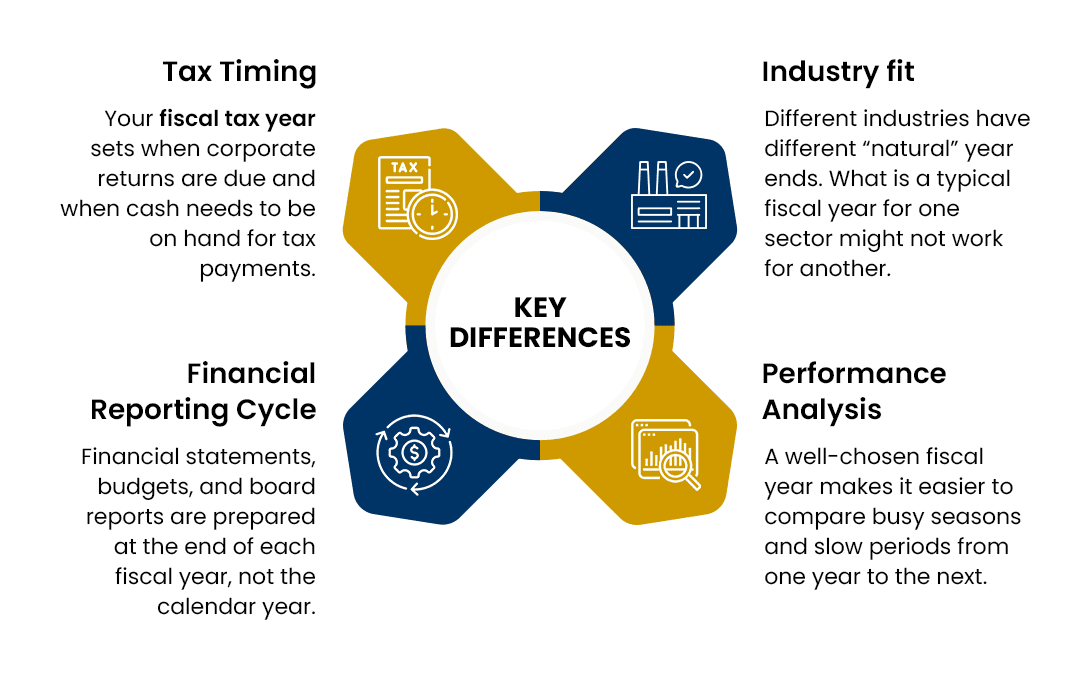
Tax timing: Your fiscal tax year sets when corporate returns are due and when cash needs to be on hand for tax payments.
Financial reporting cycle: Financial statements, budgets, and board reports are prepared at the end of each fiscal year, not the calendar year.
Performance analysis: A well-chosen fiscal year makes it easier to compare busy seasons and slow periods from one year to the next.
Industry fit: Different industries have different “natural” year ends. What is a typical fiscal year for one sector might not work for another.
Because of these differences, many organizations pick a company’s fiscal year that reflects their operating cycle instead of defaulting to the calendar year.
Types of Fiscal Years
There is no single right answer to what is a fiscal year for a business. Instead, you will see a few common patterns.
Businesses usually choose between:
- A fiscal calendar year
- A floating fiscal year end (less common, often tied to changing business cycles)
- A more traditional fixed year end that lines up with peak or off-peak seasons
Understanding these patterns helps you decide what is a company’s fiscal year that works best for you.
What is a Fiscal Calendar Year?
A fiscal calendar year is when the fiscal year matches the standard January 1 to December 31 calendar. Many small businesses and professional firms pick this option because it is simple and aligns with most personal tax years.
Benefits of a fiscal calendar year:
- Easy to explain to owners, lenders, and staff
- Often lines up with statutory Tax Filing Services deadlines
- Reduces confusion between business and personal filings
- Works well if your sales are steady across the year
So when people ask what is a fiscal calendar year, the answer is: it is a fiscal year that is the same as the calendar year, used for business accounting and tax instead of personal tracking.
Floating Fiscal Year Ends
A floating fiscal year end is more flexible. Instead of sticking to one fixed month every year, the year end can shift to reflect changing business patterns.
This approach can appear in industries where busy periods or contracts move around, such as some project-based services, tourism, or event-driven businesses. When you ask what is a floating fiscal year end, think of a year end that moves to capture a full “business cycle” even if that cycle shifts from year to year.
Most small and mid-sized companies prefer a fixed date for simplicity, but understanding this concept helps when comparing different industries.
How Fiscal Years Work for Businesses
For a business, what is a fiscal year in accounting is more than a definition in a textbook. It is the period that anchors your bookkeeping, your Bookkeeping Services, your financial reporting, and your tax planning.
Once a business chooses a fiscal year:
- All revenue and expenses are grouped into that 12-month window
- Financial statements (income statement, balance sheet, cash flow) are prepared at the fiscal year end
- Banks and investors assess your performance using that cycle
- Management uses year-over-year comparisons to guide decisions
So what is a fiscal year for a business? It is the 12-month period management and stakeholders agree to use as the standard reporting frame.
Choosing Your Fiscal Year End Date
When you choose what is a fiscal year end date for your company, keep these factors in mind:
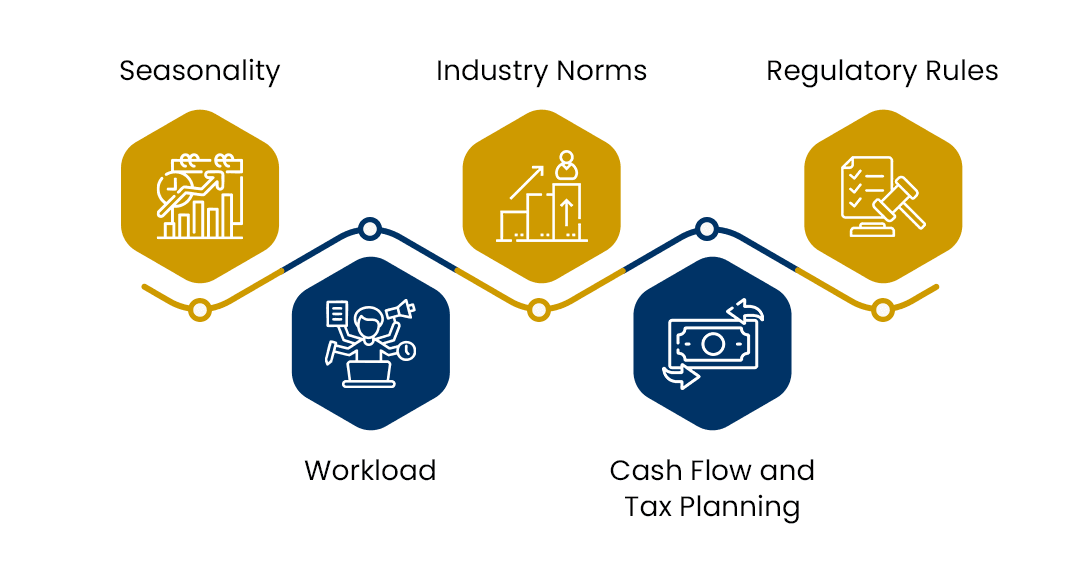
- Seasonality: Ending your year right after your busy season gives a clean picture of results.
- Workload: Some businesses prefer a quiet month so staff can focus on inventory counts and closing entries.
- Industry norms: Lining up with peers makes benchmarking easier.
- Regulatory rules: In some countries, certain entities must use specific fiscal years.
- Cash flow and tax planning: Year-end choices affect when your Corporate tax deadline and payments fall.
This is why no single date is “best.” What is considered a fiscal year for your company should reflect how and when you actually do business.
Fiscal Year in Accounting
From an accounting point of view, a fiscal year is the backbone of your reporting cycle.
When you define what is a fiscal year in accounting, you are deciding:
- How to group transactions into periods
- When to measure profit and loss
- When to update the balance sheet and cash flow
- How to present comparable data to owners and board members
A consistent fiscal year allows you to compare “this year vs. last year” in a meaningful way and gives your accountant a clear framework for closing the books.
Fiscal Year for Tax Purposes
For tax authorities, what is a fiscal tax year is all about determining when you must report income and pay tax.
Your corporate fiscal year drives:
- Your fiscal tax year end date
- When corporate tax returns are filed
- When installments and final balances are due
- How tax planning strategies are timed to Maximize tax return opportunities
Fiscal Tax Year End Dates
Each country sets its own rules about filing deadlines and payments based on your year end. In general:
- Corporate tax returns are due a set number of months after the fiscal year end
- Payments are often due earlier than the filing deadline
- Late filing or late payment can trigger penalties and interest
So when someone asks what is a fiscal year for taxes, the answer is: it is your chosen 12-month reporting period as recognized by the tax authority, which sets your filing dates and payment schedule.
Fiscal Year for Taxes in Canada
If you are wondering what is a fiscal year in Canada for corporations:
- Most corporations can choose any fiscal year end they want, as long as it is a full 12-month period (with limited exceptions in the first year).
- Once picked, that year end is used consistently unless you get approval to change it.
- Corporate tax returns are typically due six months after fiscal year end, while taxes owing are often due two or three months after year end, depending on the type of corporation and its Corporate tax rate situation.
- Most individuals, including many unincorporated businesses, must use the calendar year as their tax year.
Because of this, aligning your fiscal year with your cash flow, tax rules, and Corporate tax deadline is a key planning step.
Examples of Fiscal Years in Practice
Here are a few examples of how different organizations answer what is a typical fiscal year:
- Large retailers: Often pick a fiscal year ending in January to capture the full holiday season’s sales and returns before closing the books.
- Agricultural businesses: May end their fiscal year after harvest when inventory and revenue are clearer.
- Nonprofits and charities: Sometimes match their fiscal year with grant cycles, government funding years, or reporting requirements.
- Professional firms: Often use a fiscal calendar year for simple alignment with owner tax filings.
These examples show why there is no single “correct” fiscal year. The best choice depends on your industry, cash cycle, and reporting needs.
Changing Your Company’s Fiscal Year
Once you have set a fiscal year, you can usually change it, but it is not as simple as flipping a switch.
To change your company’s fiscal year:
- Many jurisdictions require approval from the tax authority or corporate registry.
- You may need to file a short-year return during the transition.
- Your accountant must adjust your accounting system, reporting timelines, and possibly your bank covenants.
- Internal processes like budgeting and performance bonuses may need to shift.
Because this affects both accounting and tax obligations, it is wise to speak with an advisor before changing your fiscal year. A well-planned change can help you better match your fiscal year to your real-world business cycles and financial goals.
Frequently Asked Questions – What is a Fiscal Year?
What is a fiscal calendar year?
A fiscal calendar year is a fiscal year that runs from January 1 to December 31, just like the regular calendar year. Businesses that want simple reporting and easy alignment with personal tax filings often choose this structure.
What is a fiscal year end?
Your fiscal year end is the last day of your fiscal year. It is the cut-off date for recording income and expenses and the date your accountant uses to prepare year-end financial statements and tax filings.
What is a typical fiscal year for businesses?
There is no single typical fiscal year. Many companies use a December 31 year end, but others choose dates that line up with busy seasons, inventory cycles, or grant periods. “Typical” depends on the industry and the business model.
How is a fiscal year set for a company?
A fiscal year is set when the company is formed or when the owners and advisors pick the first year-end date. They consider seasonality, industry practice, cash flow, and tax rules. In some cases, regulations limit the options available.
What is a floating fiscal year end?
A floating fiscal year end is a year-end that can move to reflect changing business cycles instead of staying on the same date every year. It is less common and usually used in specialized or contract-driven industries.
What is considered a fiscal tax year end date?
A fiscal tax year end date is the official end of your tax year as recognized by the tax authority. It drives your filing deadlines and payment dates and is typically the same as your accounting year end for corporate taxpayers.
Why do companies choose different fiscal years?
Companies choose different fiscal years to better reflect when they earn revenue, when they incur major costs, and when staff can close the books. The goal is clear reporting, smoother cash flow, and better management decisions.
What is a fiscal year for accounting purposes?
For accounting purposes, a fiscal year is the 12-month period over which a business records and reports all financial activities. It defines which transactions belong to which year’s income statement, balance sheet, and cash flow statement.
Can a company change its fiscal year?
Yes, many companies can change their fiscal year, but they often need approval from tax authorities or regulators. The change can create a short fiscal period and may affect tax filings, bank agreements, and internal reporting.
What is a fiscal year for taxes in Canada?
For corporations in Canada, the fiscal year for taxes is the 12-month period the corporation chooses as its tax year. Corporate tax returns are generally due six months after that year end, and taxes are often due two or three months after year end. Most individuals must use the calendar year.
What is a fiscal year for a nonprofit?
A nonprofit’s fiscal year is the 12-month period it uses for budgeting, reporting to its board, and filing required government reports. Many nonprofits align their year end with funding or grant cycles to make reporting easier.
How do fiscal years impact financial reporting?
Fiscal years shape when financial statements are prepared, how performance is compared over time, and when stakeholders receive updates. A well-chosen fiscal year supports clear, timely reporting and better planning.
Closing Thoughts and Next Steps
Defining what is a fiscal year for your company is not just a paperwork exercise. It affects how you plan, how you report, and how you pay tax. The right fiscal year helps you manage busy seasons, meet deadlines, and make smarter decisions.
If you are unsure which fiscal year end to choose, or you are thinking about changing it, working with a professional can help. Orbit Accountants can support you with ongoing Bookkeeping Services and Tax Filing Services so your fiscal year, reporting, and tax planning all work together to help you Maximize tax return opportunities and stay compliant year-round.
Legal Disclaimer
This blog is provided for general information only and does not constitute legal, tax, accounting, or financial advice. You should not rely on this summary as a substitute for professional guidance tailored to your specific situation. Tax rules, filing deadlines, and regulatory requirements change over time and may vary by jurisdiction. Orbit Accountants and the author accept no responsibility for any loss or damages arising from actions taken based on this content. Always consult a qualified professional before making decisions that affect your business or personal finances.