
What Are Pay Stubs? A Guide to Understanding Payroll Details
Payroll documents often seem routine—until a discrepancy appears. At that moment, every line item on your statement carries weight. In Canada, payroll errors frequently stem from miscalculated deductions or overlooked benefit entries. A transparent, accurate pay stub mitigates these risks, ensuring employees are paid correctly and businesses stay compliant.
But what exactly are you looking at? This guide breaks down how pay stubs work, how to read them,and why they are your most important financial “receipt.”
What Is a Pay Stub
Definition of a Pay Stub
A pay stub (also known as a pay slip or earnings statement) is a document that provides a granular breakdown of an employee’s compensation for a specific pay period. It bridges the gap between gross pay and the final take-home amount by detailing every tax, deduction, and benefit contribution in between.
Essentially, it answers the fundamental question: “How did my employer arrive at this specific deposit amount?”
Purpose of a Pay Stub
Beyond basic payroll reporting, pay stubs serve several practical purposes.
They help employees:
- verify their pay rate
- track deductions
- confirm benefit contributions
They also function as proof of income. Financial institutions, landlords, and lenders frequently request pay stubs when verifying employment income.
Pay Stub vs Paycheque
What Is a Paycheque?
A paycheque is the payment an employer provides to an employee. While businesses previously issued physical cheques, most now use direct deposit to transfer wages electronically.
It represents the actual amount paid to the employee for their work.
Difference Between Pay Stub and Paycheque
While these terms are often mentioned together, they serve different roles.
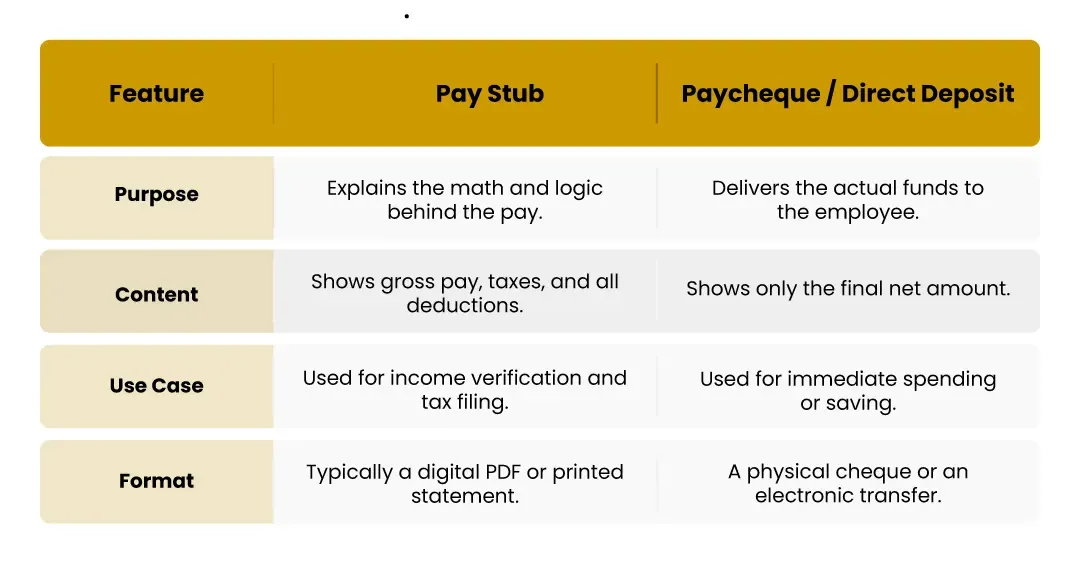
| Feature | Pay Stub | Paycheque |
| Purpose | Provides a detailed breakdown of earnings, taxes, and deductions | Represents the actual payment issued to the employee |
| Content | Shows gross pay, deductions, benefits, and net pay | Shows only the payment amount |
| Function | Explains how the employee’s wages were calculated | Delivers the wages earned for the pay period |
| Use | Helps employees verify payroll calculations and track income | Used as the method through which wages are paid |
| Format | Usually issued as a digital or printed payroll statement | Can be a physical cheque or an electronic bank deposit |
In simple terms, the paycheque provides the money, while the pay stub explains the numbers behind it. Without the payroll statement, employees would only see the final deposit without understanding what are deductions on a pay stub or how taxes and benefits affect their pay.
Key Components of a Pay Stub
A pay stub which has been properly prepared contains multiple sections. The total payroll calculation process depends on each individual component. The deductions which employees see on their pay stubs together with their impact on take-home pay become clear when people understand these elements.
Employee and Employer Information
The top section usually lists identifying details such as:
- employee name
- employee ID or number
- employer name
- company contact information
Pay Period Information
The pay period section outlines the timeframe for which wages were earned. It includes:
- pay period start and end dates
- payment date
- payroll schedule (weekly, biweekly, or monthly)
Earnings and Gross Pay
Gross pay represents the total earnings before any deductions are applied.
Regular Earnings
Regular earnings reflect wages earned based on the employee’s hourly rate or salary.
For hourly workers, the pay stub may display:
- hours worked
- hourly rate
- total wages for the period
Additional Earnings
Some pay stubs also include additional income such as:
- overtime
- bonuses
- commissions
- allowances
All of these amounts contribute to the employee’s gross pay.
Payroll Deductions
Deductions get applied after earnings calculation has been completed. The company deducts these amounts from gross wages before making the final payment to the employee. The section of payroll deductions needs understanding because it creates frequent questions about payroll calculations.
Tax Deductions
Mandatory deductions in Canada typically include:
- federal income tax
- provincial income tax
- Canada Pension Plan (CPP) contributions
- Employment Insurance (EI)
Accurate reporting of these amounts is essential to avoid complications during a CRA Payroll Audit.
Benefits and Other Deductions
Some deductions on a pay stub relate to employee benefits such as health or dental coverage, retirement plans, or insurance.
Common examples include:
- Voluntary deductions: Employees often ask what are voluntary deductions on a pay stub. These are optional contributions employees choose, such as certain benefit plans.
- Employer-paid benefits: If you wonder what are employer paid benefits on pay stub, these are contributions made by the employer toward benefits like insurance or retirement programs.
- Taxable benefits: Some benefits must be reported as income. These are known as what are taxable benefits on pay stub, and many companies use Tax compliance services to record them correctly.
Net Pay (Take-Home Pay)
Net pay is the amount an employee actually receives after deductions. The total amount which an employee receives after deductions is known as take-home pay.
Year-to-Date Totals
Many pay stubs include cumulative totals showing earnings and deductions since the start of the year. The figures enable employees to monitor their yearly earnings while also assisting them in completing their Year end payroll checklist.
How to Read a Pay Stub
Reading a payroll statement becomes much easier once you know where to look.
Check the Pay Period
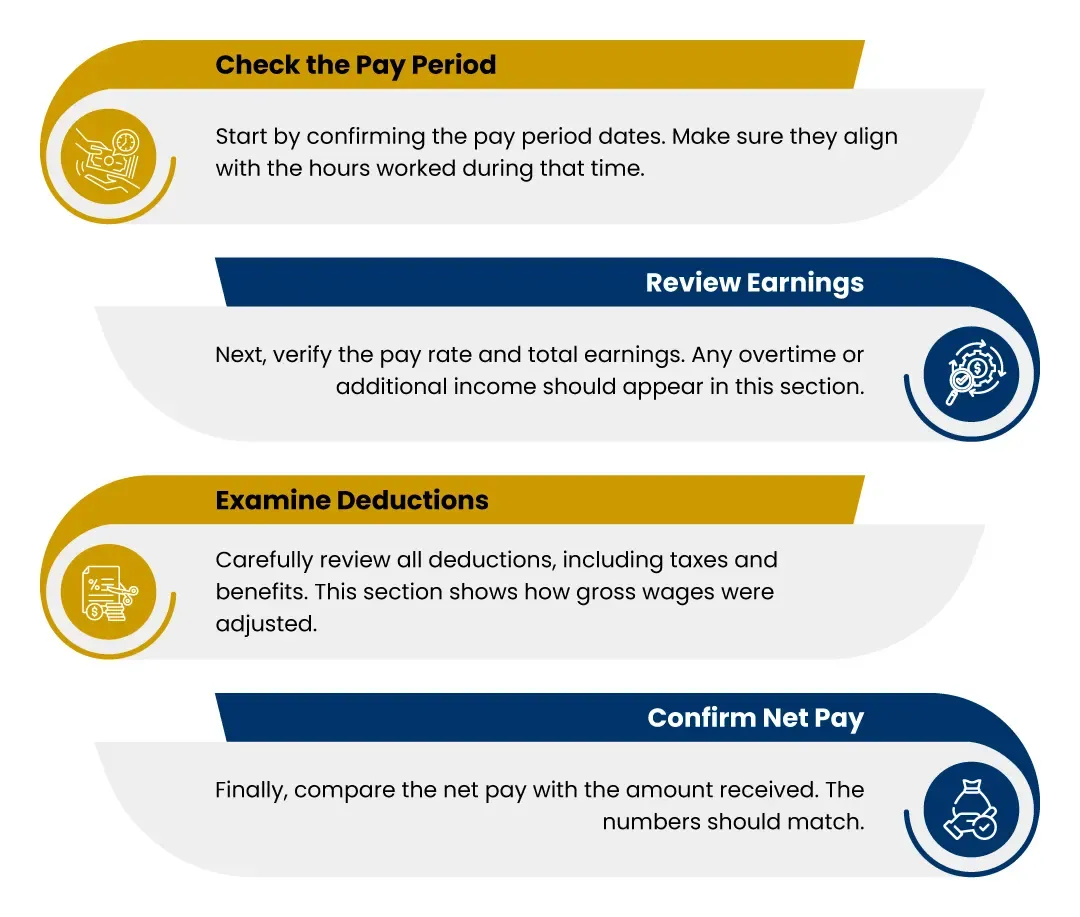
Start by confirming the pay period dates. Make sure they align with the hours worked during that time.
Review Earnings
Next, verify the pay rate and total earnings. Any overtime or additional income should appear in this section.
Examine Deductions
Carefully review all deductions, including taxes and benefits. This section shows how gross wages were adjusted.
Confirm Net Pay
Finally, compare the net pay with the amount received. The numbers should match.
Organizations that understand the Benefits of Outsourcing Payroll Services often experience fewer payroll discrepancies because professionals handle the calculations and reporting.
Why Pay Stubs Are Important
Proof of Income
Pay stubs frequently serve as income verification. Banks, lenders, and landlords often request them during financial applications.
Payroll Transparency
Payroll statements make compensation easier to understand. Employees can see exactly how their wages were calculated.
Financial Record keeping
Pay stubs serve as important payroll records for both employees and employers. They show total earnings, deductions, and net pay, helping employees track income while supporting accurate documentation and compliance. The document explains what are pay stubs used for, especially when reviewing financial record assessment and payroll error resolution.
Bringing Clarity to Payroll Statements
Pay stubs are a key part of the payroll process, showing earnings, deductions, and final take-home pay for every pay period. When employees understand how to read them, it becomes easier to confirm that wages and deductions are accurate.
For employers, clear payroll statements support proper recordkeeping and help meet payroll regulations. Orbit Accountants works with businesses across Canada to simplify payroll management and provide accurate pay stubs through reliable payroll services. We believe in helping teams stay organized and compliant every pay cycle.
FAQs
What are pay stubs for?
Pay stubs provide a detailed record of an employee’s earnings, deductions, and net pay for each payroll period. They help employees verify their wages and assist employers in maintaining payroll records.
What are pay stubs used for?
Pay stubs are commonly used as proof of income when applying for loans, rentals, or financial services. They also help employees track taxes and deductions.
What are employer paid benefits on pay stub?
These are contributions made by the employer toward benefits such as insurance or retirement plans.
What are taxable benefits on pay stub?
These are benefits that must be reported as income and may be subject to tax.
What are voluntary deductions on a pay stub?
These are optional deductions employees agree to, such as retirement contributions or benefit programs.
Disclaimer
This content is for informational purposes only and should not be considered professional financial or payroll advice. Consult a qualified professional for guidance specific to your situation.